
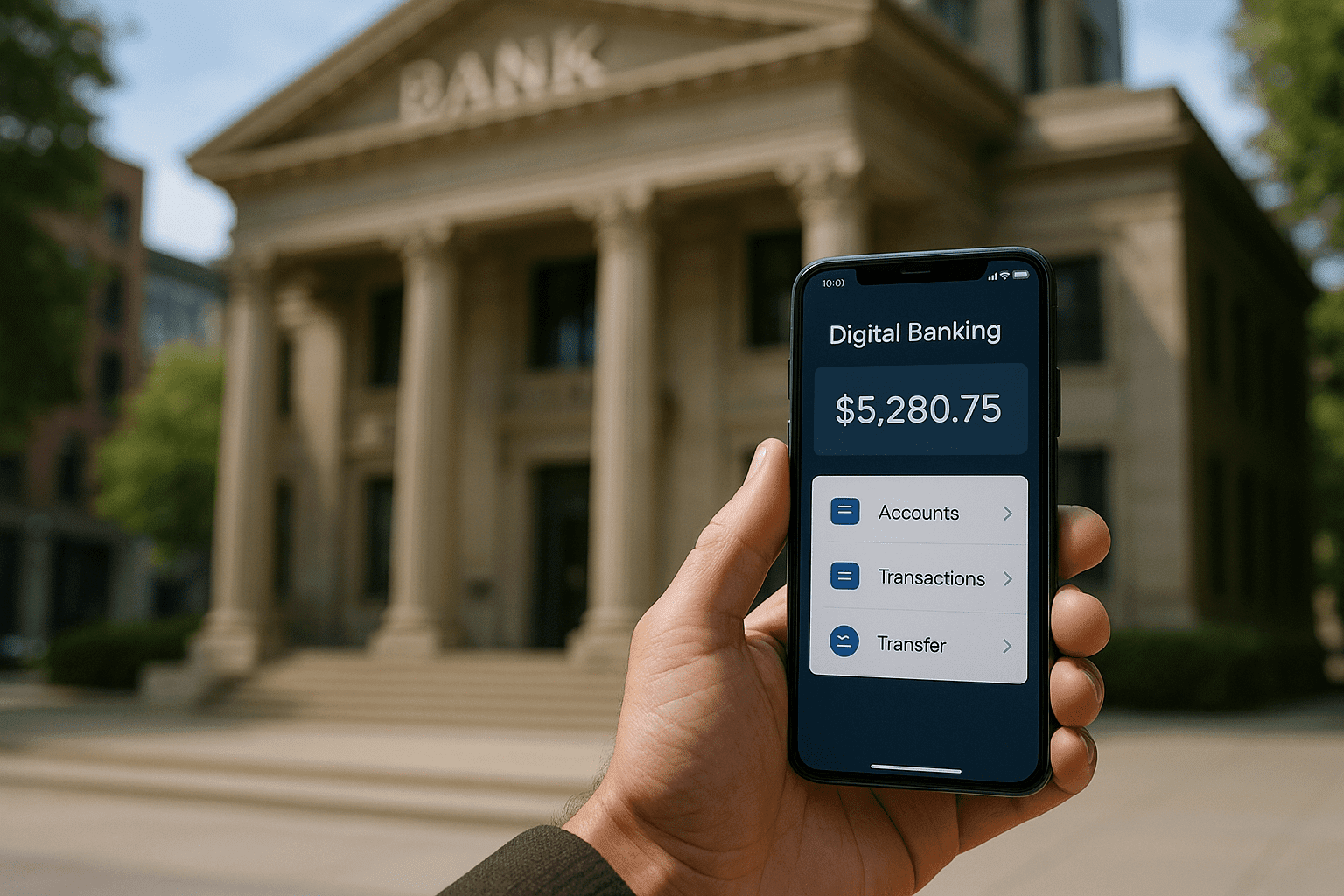
Watching banks and customers over the last decade, a clear pattern emerges. The digital world does not just add a new channel for banking. It is recalibrating what people expect from their financial relationships and the role banks play in daily money management.
The quiet revolution in how money moves
Interest in digital banking has steadily grown alongside smartphone adoption and faster internet access. What was once a novelty checking account feature is now a primary way many people move money, check balances, or even apply for loans. Digital banking provides a level of immediacy rarely matched by physical branches. Instead of planning schedules around branch hours, customers expect to handle most financial tasks anywhere, anytime.
This shift introduces convenience but also changes the nature of personal connection. For decades, visiting a bank branch had a ritualistic feeling. There was a recognizable human rhythm to conversations with tellers or lenders, reinforcing trust and relationship capital. Digital banking replaces much of this with automated interfaces, chatbots, or self-service tools designed for speed and efficiency.
While some users appreciate this efficiency, others experience a sense of disconnection. Financial decision-making, which often involves complex emotions and trust, now happens through pixels and code. Banks face a challenge in sustaining loyalty and trust when meaningful in-person interactions become rare.
Old branches stand in new shadows
Physical branches, once the cornerstone of customer relationships, are adapting or shrinking in number. The response is not uniform. Larger banks with national reach often reduce their branch footprint, focusing investments on digital platforms and centralized customer support. Smaller community banks face tension between maintaining a physical presence valued by local customers and the rising costs of operating branches that see less traffic.
Surprisingly, some customers still value branches for certain needs, such as cash deposits or talking through complicated financial situations. However, digital tools can now handle many routine tasks faster and at a lower cost, making branch visits less frequent.
This dynamic signals a nuanced coexistence rather than total replacement. Branches evolve to offer specialized services, financial advice, or complex problem-solving that digital channels are not yet equipped to deliver.
Rewiring trust and financial identities
Trust in banking is a subtle but central issue in this evolving landscape. Traditional banking relationships included an implicit social component: the person at the counter knew your name, your history, even your family story in smaller communities. Digital banking, while providing technical security through encryption and multi-factor authentication, delivers this assurance in a different form.
For some, having robust security measures visible in the app, immediate fraud alerts, or easy dispute processes builds trust in a new way. For others, the absence of a familiar face and the intangible nature of digital confidence can erode comfort. Banks increasingly rely on data analytics, personalized messages, and tailored offers to mimic the old relational dynamics in a virtual environment.
This shift also affects how people perceive their financial identity. The fragmentation between digital wallets, traditional bank accounts, and alternative lending platforms can feel disjointed. Managing money is no longer just a matter between customer and one bank; it often involves a constellation of services tracked through screens.
The cost and cultural side of the digital switch
On the operational side, digital banking dramatically changes cost structures for banks. Branch overhead, teller salaries, and physical infrastructure shrink, allowing a focus on software development, cybersecurity, and user experience design. These shifts demand talent in very different areas, reshaping the workforce profile within the industry.
The cultural transition can be tricky. Many banks have histories rooted in community presence and personalized service. Moving fast into digital service models requires investment not only in technology but in training and reshaping customer service philosophies. Mistakes or outages in digital platforms tend to be more visible and can quickly damage reputations built over decades.
At the same time, digital-first financial service providers, including fintech startups, bring fresh approaches and appeal to younger customers who have grown accustomed to instant gratification and intuitive apps. These challengers push traditional banks to innovate or risk losing relevance, particularly among digitally native generations.
Looking beyond the numbers to real human experience
The rise of digital banking offers undeniable conveniences and new possibilities. But it also invites reflection on what people lose or gain in financial interactions. Ease and speed do not always substitute for deeper trust or personalized guidance. How banks manage this balance may define the future of financial relationships.
The story unfolding with digital banking is less about disruption alone and more about adaptation. Traditional banks are quietly transforming from places one visits to platforms one accesses. Understanding this evolution means watching not only technology and strategy but the lived experiences of customers navigating new ways to handle their money.
As the landscape shifts, many are still seeking spaces where financial expertise and personal connection come together, whether on a screen or face to face.
For further reading on digital banking’s evolution and its impact on customers, reputable resources include The Federal Reserve’s examination of digital payment trends and research from the American Bankers Association on banking technology adoption. The Consumer Financial Protection Bureau also provides guidance on digital financial services and how consumers can engage safely.
Federal Reserve on Digital Payments
American Bankers Association on Banking Technology
Consumer Financial Protection Bureau on Digital Financial Services
Sources and Helpful Links