
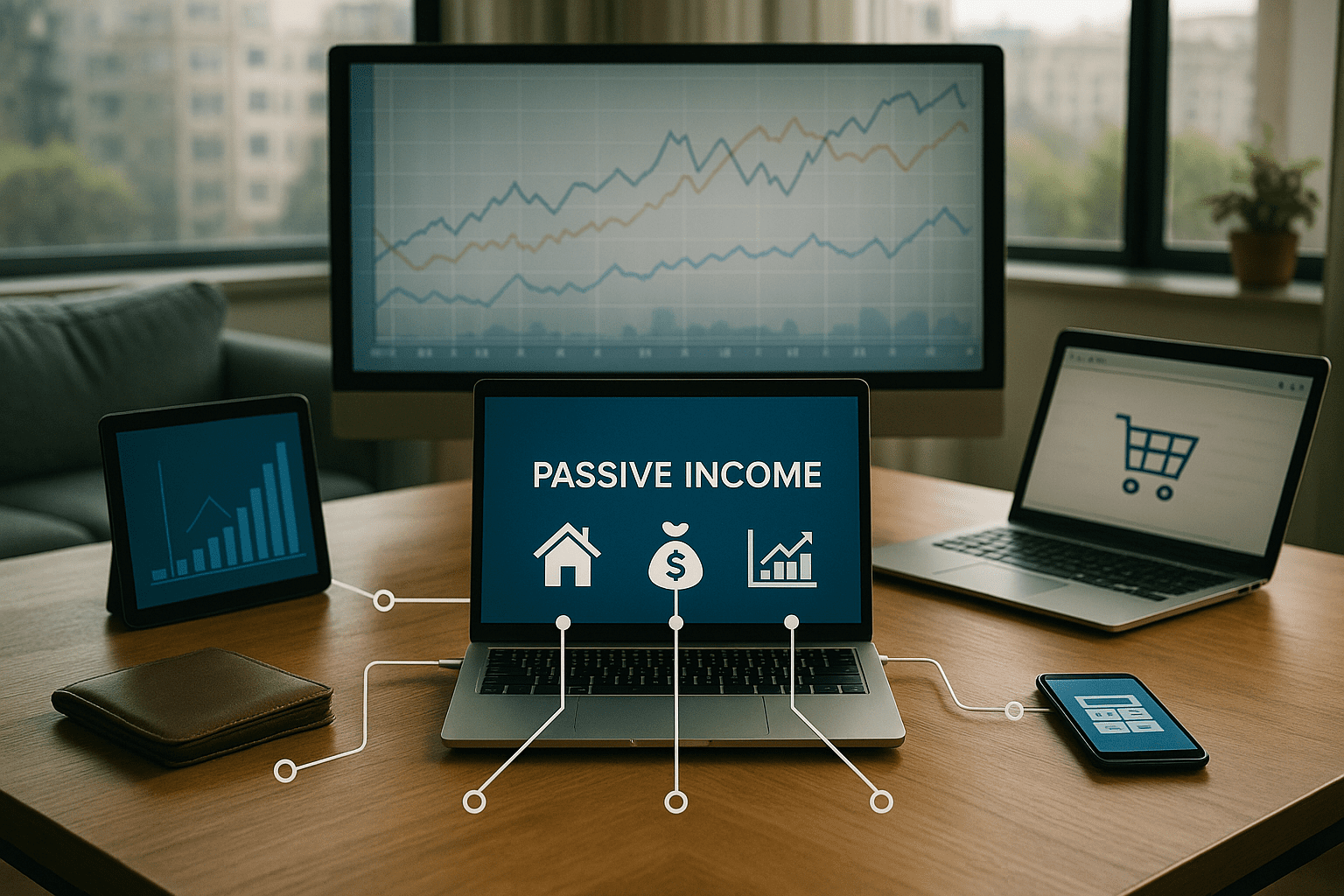
There is something quietly revealing about the steady rise of passive income projects online. While they come in many forms, from affiliate marketing to rental platforms and automated content channels, these ventures illustrate patterns that reflect larger economic realities. Instead of looking at them as isolated hustles, they act as a lens on how people respond financially to the evolving structure of work, technology, and markets.
Owning a Slice of Digital Infrastructure
One of the most noticeable economic undercurrents linked to online passive income is the shift toward ownership of digital infrastructure. Creating a website or app that generates steady revenue from ads, subscriptions, or sales can be compared to owning rental real estate in the physical world. Such platforms become assets that yield income without constant active management once established.
This trend has roots in longstanding economic themes like capital accumulation and income distribution. But the digital form alters some dynamics, making entry more accessible to many who might never own physical property. However, it also concentrates gains in ways reflecting broader inequality patterns. Success often depends on initial investments, technical skill, and access to network effects.
As regulators watch these evolving online spaces, questions arise about how such assets fit into the overall economy and what protections or rules are needed. What seems like easy income on the surface intersects with policy debates about market fairness and the future of work.
The Influence of Platform Economies
Fast forward, and platform economies dominate the landscape for passive income online. Sites like YouTube, Amazon, or Etsy act as gatekeepers and markets, channeling huge flows of money to creators, sellers, and service providers. The conditions set by these platforms influence both opportunity and risk.
For individuals trying to build passive revenue, the control these platforms exert echoes wider economic concerns about labor and capital relationships. Although the word passive suggests little ongoing effort, the reality often involves constant optimization to stay visible and relevant amid changing algorithms and market tastes.
It is a reminder that passive income is seldom entirely without investment of time or strategic adjustment. New earning opportunities arise as the platforms evolve, but so do challenges from increasing competition and shifting rules. This scenario mirrors broader economic cycles where innovation brings both winners and losers in new configurations.
Financial Technology and Access
Financial technology has quietly transformed how passive income ventures operate, reflecting a broader shift in economic infrastructure. Payment systems, digital wallets, and crowdfunding platforms enable creators to diversify income streams and access capital or audiences more efficiently than previous generations might have imagined.
At the same time, fintech innovations illustrate a double edge. They can democratize access but also introduce new complexities and vulnerabilities. For instance, fluctuations in online advertising markets or payment platform policies can abruptly reshape earnings, reflecting how online income is embedded in larger financial networks with their own instability and regulatory uncertainty.
The intersection of fintech and passive income is a live example of how technology changes money flows without rewriting the underlying economic dynamics. These ventures thrive or stumble amid conditions shaped by credit availability, consumer demand, and regulatory frameworks that extend well beyond individual platforms.
Lessons from Changing Consumer Behavior
Passive income online also offers a subtle window into how consumer behavior patterns intertwine with economic forces. Audiences for content, products, or services increasingly prefer convenience, subscription models, or personalized experiences, all driving new forms of recurring revenue that fewer physical businesses could easily emulate.
This consumer shift, in part enabled by technology, leads to ongoing adjustments in how online ventures structure their offerings and revenue models. For example, micro-subscriptions or memberships represent a departure from one-off sales and highlight new preferences in spending at scale.
These evolving consumer habits serve as a microcosm of how broader economic demand trends shift, influencing everything from employment structures to investment flows. Observing the ebb and flow of these preferences through the lens of online passive income sheds light on greater threads running through the modern economy.
The Realities Beneath the Idea of Effortless Earnings
Above all, the rise of passive income online is a reminder that what might seem effortless at first glance is often a product of sustained effort, strategy, and adaptation. Far from a simple shortcut, these ventures demand ongoing involvement and learning as economic and technological conditions change.
This truth aligns with persistent economic patterns where wealth generation rarely happens without risk or continued input. Online passive income projects reflect this age-old reality dressed in new digital clothes, interacting with labor markets, investment flows, and consumer trends in ways that are both novel and familiar.
Watching these ventures evolve offers a real-world view on how broader economic currents shape individual financial possibilities and limitations in an increasingly online world.
To better understand how passive income strategies fit into your financial picture or the larger economy, staying current with resources from regulatory bodies and trusted financial education sites can provide clarity. Websites like Consumer Financial Protection Bureau and Bureau of Labor Statistics offer insights into economic conditions that influence money making opportunities and risks.
Pattern recognition in this space comes from noticing how individual decisions about online ventures echo wider economic structures rather than ignoring them for simplistic narratives of easy profit.
Sources and Helpful Links
- FTC guidance on internet advertising, official advice on how online marketing must operate
- Consumer Financial Protection Bureau, consumer resources on finance and regulation
- Bureau of Labor Statistics, data on work and economic conditions