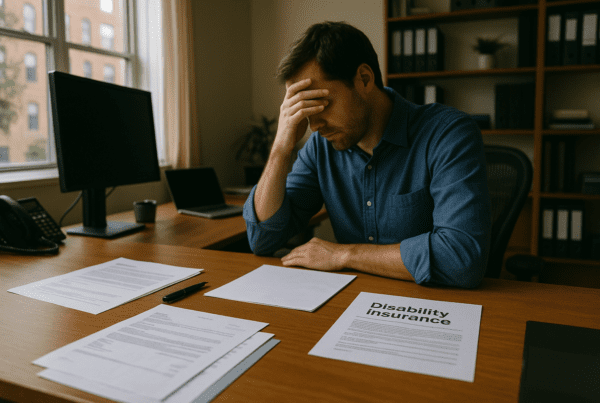

Disability insurance claims are often viewed as individual markers of personal hardship, moments when illness or injury temporarily cuts a worker off from their livelihood. Examined together, these claims sketch a broader portrait of how workplaces are changing, how health challenges evolve with job demands, and how economic conditions influence the capacity to stay at work.
The stories embedded in large scale data
Claims data collected over years or even decades offer more than just numbers. They represent thousands of individuals facing health setbacks within the context of their jobs. From these individual cases, patterns emerge that reveal shifting realities. Physical ailments remain a dominant cause of disability claims, with musculoskeletal problems consistently leading. But mental health disorders and stress-related conditions have gained ground, a trend supported by research such as that found in the National Institutes of Health database.
The rise in mental health claims is not just about increased awareness or diagnosis. It underscores how workplace stress, cognitive demands, and social dynamics at work contribute to real and lasting impairment. Work environments that foster chronic stress or provide inadequate support leave their mark on disability patterns. These changes reflect deeper cultural shifts around acknowledging mental health openly, moving away from stigma and toward recognition of psychological well-being as central to productive work.
Evolving physical risks in newer work contexts
Workplaces have transformed dramatically. While manual labor was once the main source of physical injury, office-based or remote jobs now carry their own sets of risks. Sedentary work, repetitive motions from computer use, and poorly designed workstations have become common roots of injury claims. Conditions such as back pain, carpal tunnel syndrome, and other repetitive strain injuries remain prevalent, though they manifest differently than classic industrial injuries.
The increase in remote work has introduced complexities. Home offices vary widely in ergonomics and setup quality, often lacking the safeguards present in traditional workplaces. This variation shows in disability claims related to physical complaints, sometimes stretching the definition of work-related injury as boundaries between work and personal space blur. Agencies like the Occupational Safety and Health Administration continue to grapple with expanding workplace risk definitions to accommodate these new realities.
Long term claims reveal intersections between health and economic stability
Extended disability claims often go beyond health itself to expose economic and structural factors. Workers facing prolonged absence from work may do so not only due to recovery needs but also fragilities within their employment conditions. Part-time, temporary, and gig economy roles frequently lack adequate benefits or accommodations, complicating return-to-work decisions.
This is more than anecdote. The Social Security Administration reports consistently show that workers with fewer financial resources or less stable job attachments tend to experience longer durations of disability. Such findings highlight how social safety nets, employer policies, and economic inequality shape not just who files claims but also how long those claims last.
Insurance practices adapting to multifaceted realities
Insurers and employers have had to adjust to these emerging patterns. Coverage has broadened to more comprehensively include mental health conditions, acknowledging their significant role in disability claims. Additionally, proactive programs aiming at early intervention and supported gradual returns to work have become increasingly common.
This reflects a shift from a narrow focus on physical injuries toward a more nuanced approach, accounting for psychosocial factors and workplace dynamics. Instead of simply compensating absence, modern disability insurance practices emphasize managing risk holistically and facilitating reintegration in a way that benefits workers and employers alike while aiming for cost sustainability.
How data connects to real worker experiences
Each claim hides an individual negotiating health challenges alongside financial and job security concerns. Aggregated, these claims provide snapshots of how health and work intertwine at scale. They reveal how the balance between physical and mental health risks has shifted, how technology influences body and mind, and how economic conditions mediate the experience of injury or illness.
Drawing insights from this data encourages thoughtful dialogue among policymakers, employers, and insurers about designing workplaces and support systems that reflect current realities. The changes in claim patterns accompany broader cultural shifts, including more openness around mental health and deeper questions about fairness and security in employment.
As work continues to transform with evolving technology, economic shifts, and social values, the story told by disability insurance claims remains a vital lens. It illuminates the challenges workers face and helps align insurance schemes and workplace policies with the needs of today’s labor force rather than outdated models.
In the end, these claims trace not only medical facts but also the boundaries of what work is and can be in changing times. They stand as quiet testimony to the intersection of health, economics, and culture that shapes how people earn a living and cope with setbacks in the modern workplace.
Sources and Helpful Links
- National Institutes of Health – Mental Health and Disability, a public research article on mental health trends affecting disability claims
- Occupational Safety and Health Administration, information on workplace safety and health risks
- Social Security Administration, data and analysis on long term disability
- DisabilityCanHappen.org, resources on understanding disability insurance and workplace risks