The modern financial landscape feels different as the expectation for instant payments grows louder every year. Real-time transfers, once a luxury for select use cases, now shape how consumers think about moving money. The steady expansion of digital banking services willing and able to facilitate money that moves immediately follows a clear shift in what people value in their financial lives.
The transformation of speed into a requirement
It feels like a subtle but far-reaching change has settled into the way money flows. People no longer accept waiting for business days to settle transactions when a restaurant bill or rental payment might feel urgent. Services like the Federal Reserve’s FedNow and the Faster Payments initiative in the U.S., or international counterparts like the UK’s Faster Payments Service and India’s UPI, extend the promise that funds can move straightaway rather than trickle through slower batch processes. The result is less friction and more confidence in daily financial dealings.
This evolution is not just a matter of convenience. It alters behaviors and expectations from consumers to businesses. Small business owners often describe instant payments as vital for maintaining predictable cash flow and reducing reliance on credit lines. For individuals, immediate payment options ease budget management, letting them split expenses or handle emergencies with less worry.
Infrastructure changes beneath the surface
Delivering instant payments is not simply a technical upgrade of speed. It demands a deep reimagining of the underlying banking infrastructure. Systems must operate continuously, with near-perfect uptime, to handle transactions at any hour. This pushes digital banks toward cloud-native architectures and event-driven designs that dynamically adjust to unpredictable transaction volumes.
Consider how security evolves amid these changes. Traditional fraud detection often relies on time to manually review flags. In an instant payments context, systems have to identify suspicious activity immediately, balancing vigilance with a pain-free customer experience. Machine learning models now sift through vast streams of data in real time, looking for patterns that might indicate unusual behavior without delaying the settlement of legitimate payments.
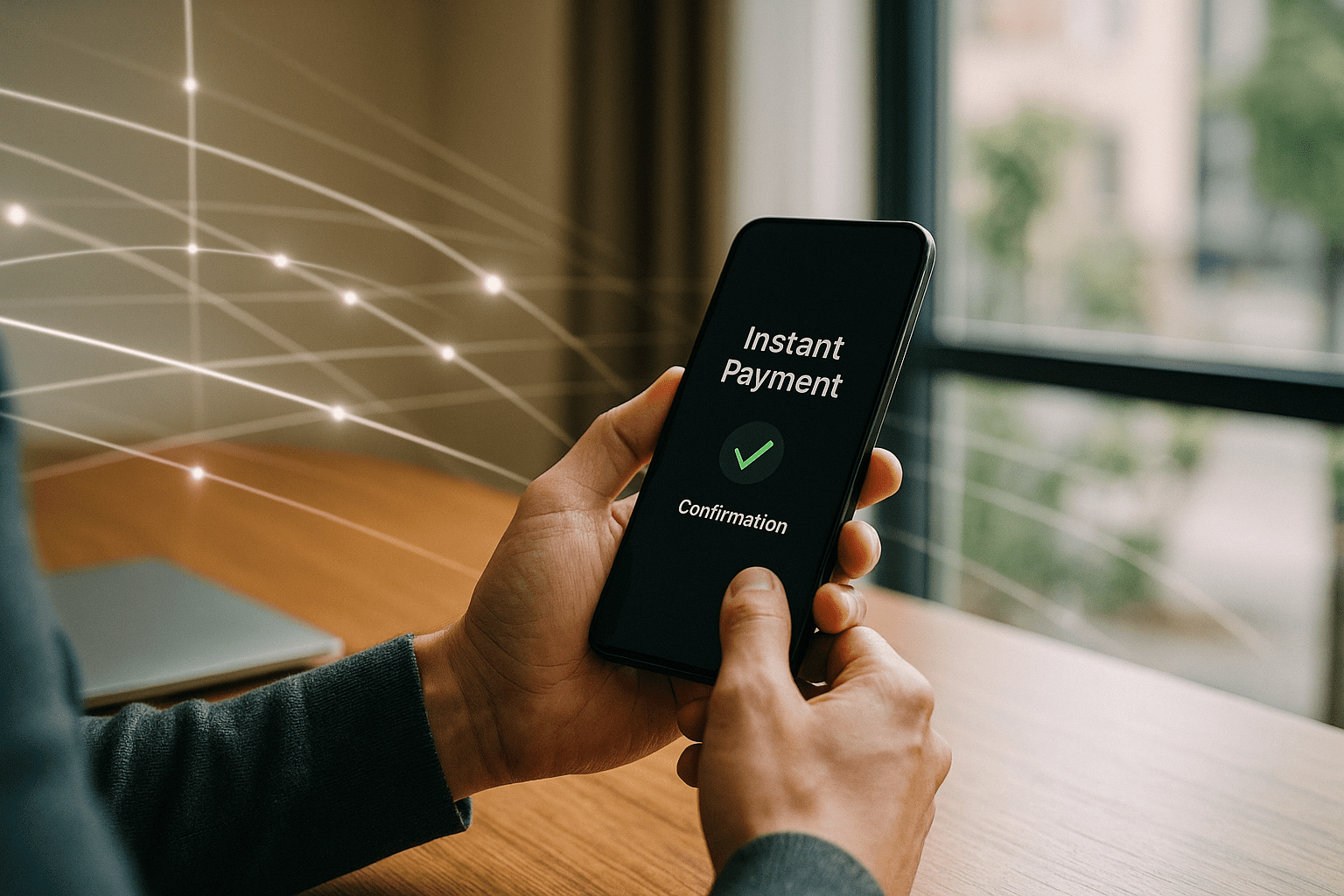
On the user side, customers expect apps to reflect these technical strengths through clear and reassuring design. Immediate confirmations, transparent updates, and simple payment histories become essential features rather than extras. Ensuring users understand when and how their payments complete helps build the trust that underpins sustained use.
Challenges of scaling and connecting networks
While many digital banks race to adopt instant payment tools, the interoperability challenge remains stark. Real-time payments rely on broad network participation to feel genuinely seamless. This makes partnerships and API-based connections between institutions unavoidable. Banks and fintech firms find themselves negotiating the tensions between legacy systems that process payments in batches and newer platforms designed for continuous flows.
Regulatory oversight is tightening alongside the growth of instant payment systems. Consumer protection frameworks now focus on payment finality, privacy safeguards, and dispute resolution mechanisms that reflect the new reality of irreversible, immediate fund transfers. For digital banking services, this means embedding compliance into the technology stack rather than treating it as a separate process.
Cross-border instant payments illustrate the limits of current networks. While domestic real-time transfers are making significant strides, international coordination lags behind due to differing regulations and infrastructure capabilities. Nonetheless, efforts like those by the Bank for International Settlements show collaboration trends aimed at expanding the reach of instant transfers internationally.
The impact beyond payments
Instant payment adoption reshapes more than just how money moves. The shift influences liquidity management, pushing banks to have more frequent updates on account balances and to rethink cash reserves. Operational teams adjust reconciliation processes to keep pace with constant activity, moving away from daily or hourly cycles toward something much more continuous.
Customers acclimated to instant settlements also grow impatient for speed in other services. Loan approvals, customer service responses, and identity verifications increasingly feel slow by comparison. Digital banks often find themselves innovating across services to match customer expectations for immediacy established by real-time payments.
Investments to support these changes are ongoing. Scalability, robust security, and regulatory challenges remain on every digital bank’s radar. Yet the push toward instant payments is unmistakably altering the relationship between banks and their customers, emphasizing convenience and transparency.
Those curious about the current landscape and growth of instant payments may want to explore FedNow for insights into the U.S. real-time payment framework, or visit Payments UK for developments across Britain. Educational resources from Nacha provide perspective on American payment systems, while the Bank for International Settlements explores global payment trends.
Sources and Helpful Links
- FedNow, information on US instant payment system development
- Payments UK, insights into UK’s faster payments initiatives
- Nacha, educational resources on real-time payments in the US
- Bank for International Settlements, research on global instant payment trends