
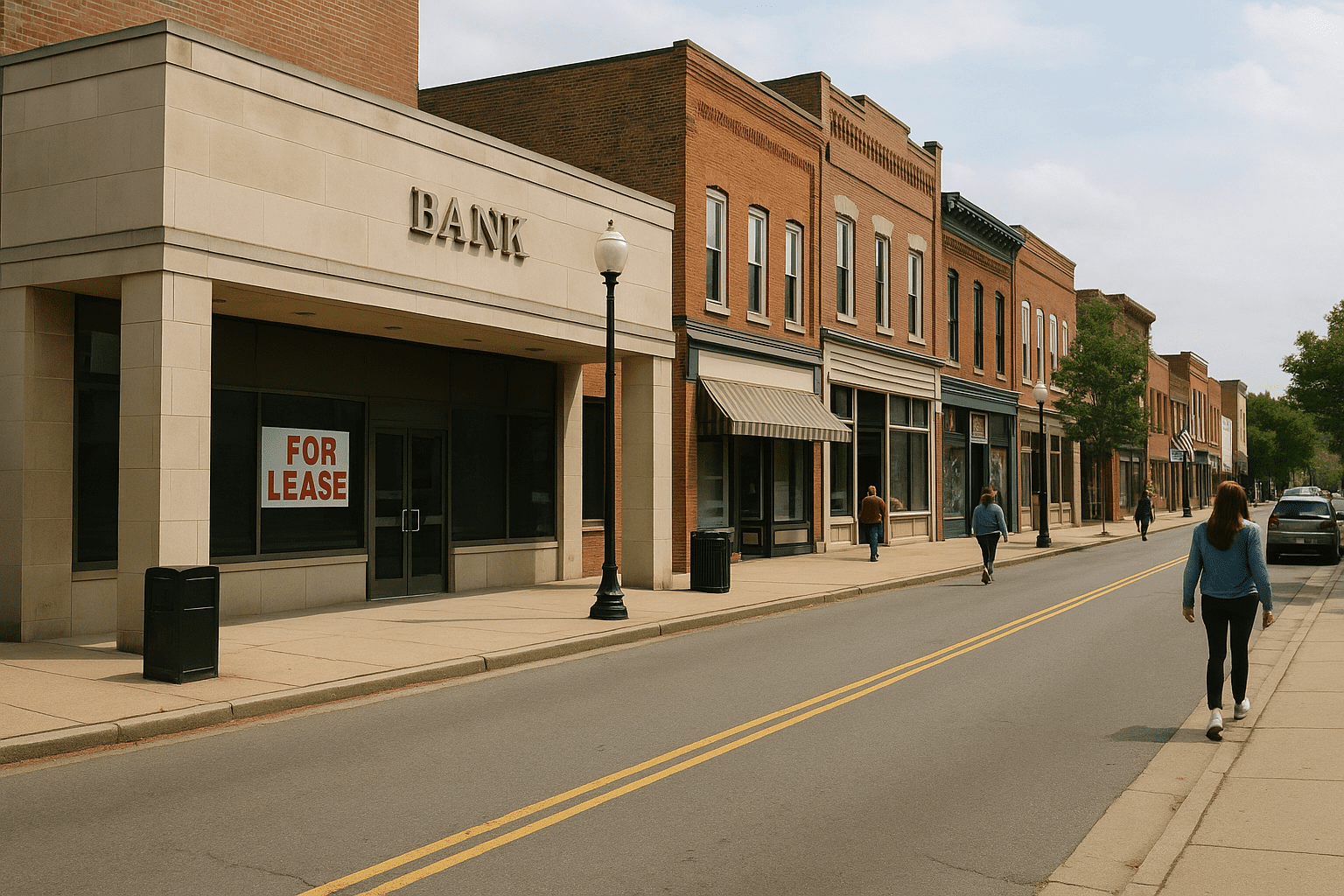
Walking through smaller towns or suburban neighborhoods recently, the quiet signs of changing banking habits become clear. The familiar logos of regional banks appear less often on storefronts, replaced in some cases by “for lease” signs or new businesses far removed from financial services. There is a subtle shift in how communities engage with their money and the institutions that support it.
When Familiar Faces and Places Fade Away
For many customers, a bank branch offered more than just a place to conduct transactions. It was where people exchanged stories, sought trustworthy advice, and found a sense of belonging in financial matters. In smaller communities, knowing the teller by name meant more than convenience. It built confidence in managing money and created a personal barrier against financial uncertainty.
Yet over the past decade, these local mainstays have receded. Regional banks, traditionally committed to close-knit communities, have trimmed their branch networks significantly. According to the Federal Deposit Insurance Corporation, many branches have quietly shut down due to mergers, cost cutting, and the rise of online banking. The patchwork of bank access begins to look quite different from what it was, even just a few years ago.
Technology Shifts That Don’t Feel Evenly Distributed
Digital banking unquestionably offers speed and convenience. Apps and websites handle deposits, transfers, bill payments, and loan requests in moments. Younger and urban populations often embrace these options with little hesitation, finding digital tools liberating and efficient.
But the convenience of technology is shadowed by real challenges. Many rural areas still suffer from poor internet connectivity. Older adults might struggle with digital literacy or feel uncomfortable sharing sensitive information online. This means that as branches disappear, some groups are faced with the double hurdle of physical distance and digital exclusion.
The Federal Reserve’s research has pointed out that physical bank locations remain crucial for a considerable share of the population. Simple tasks like notarizing documents or seeking personalized loan advice are hard to replicate remotely. While ATM machines help dispense cash, they rarely address more nuanced financial needs. As branches close, some customers turn to check cashing services or payday lenders, which can carry higher costs and increased risk.
Local Economies Experience Quiet but Real Effects
Bank branch closures do not just affect individual customers. Small businesses feel the impact as well. These businesses rely heavily on quick deposits, merchant banking services, and the flexibility that comes with a local relationship manager who understands the nuances of the local market.
Where regional banks once offered flexibility and better familiarity with local enterprises, large banks often apply more uniform, algorithm-driven decision making. When convenient branch access goes away, local firms face longer trips or unfamiliar processes, quietly adding friction to everyday operations.
Communities that are already economically vulnerable can find these changes particularly unhelpful. The presence of bank branches has long been seen as a sign of investment and stability. Their decline sometimes signals uncertainty to potential entrepreneurs or complicates the financial lives of household budgets striving to plan ahead.
Regulators, Banks, and the Search for New Solutions
Regulatory agencies have taken note of how branch closures might disproportionately affect underserved communities. The Office of the Comptroller of the Currency and other regulators have issued guidance urging banks to consider the impact on public access before reducing branch presence. Advocates emphasize that financial exclusion must not deepen due to operational decisions.
Some regional banks are attempting creative approaches to keep serving communities. Mobile banking units travel to remote areas, and partnerships with local retailers are emerging to offer basic financial services. Enhanced call centers and digital support represent further efforts to fill access gaps.
Still, these alternatives face inherent limitations. Mobile units cannot offer the full range of services delivered daily by branches. Retail partnerships require trust and coordination. And digital tools assume consistent internet coverage and user familiarity, which remains uneven across geographic and demographic lines.
Uneven Geography and the Quiet Redefinition of Financial Access
The landscape of financial service access is shifting, layered with new divides. Urban and affluent suburbs often remain well served, while rural and economically challenged regions confront extended distances, limited options, and digital hurdles. This unevenness reflects longstanding inequalities in the distribution of financial infrastructure.
For community members, adaptability becomes part of the daily routine. Some turn to credit unions, which frequently maintain branch presence and local involvement. Others explore fintech options, which may offer innovative services but can add another layer of complexity or risk. Shared rides to banks, neighborhood wisdom, and informal networks fill some gaps but cannot wholly replace formal institutions.
These slow, cumulative shifts in branch availability quietly change how people experience money in their daily lives. They prompt questions about what financial inclusion truly means beyond apps and accounts-highlighting the value of physical presence, trusted relationships, and community roots in local economies.
For those wanting to track these changes more closely, the Consumer Financial Protection Bureau’s insights on bank branch closures and the Federal Reserve’s reports on economic well-being provide rich context and data on how these trends are unfolding nationwide.
Understanding this evolving story remains essential. It reveals how community finance is not only a matter of digital innovation but of place, trust, and the steady rhythms of everyday interaction.
Sources and Helpful Links
- FDIC Failed Bank List, official records on bank closures
- Consumer Financial Protection Bureau’s guide on bank branch closures, consumer-focused explanations
- Federal Reserve Economic Well-Being Reports, data on household financial access and challenges