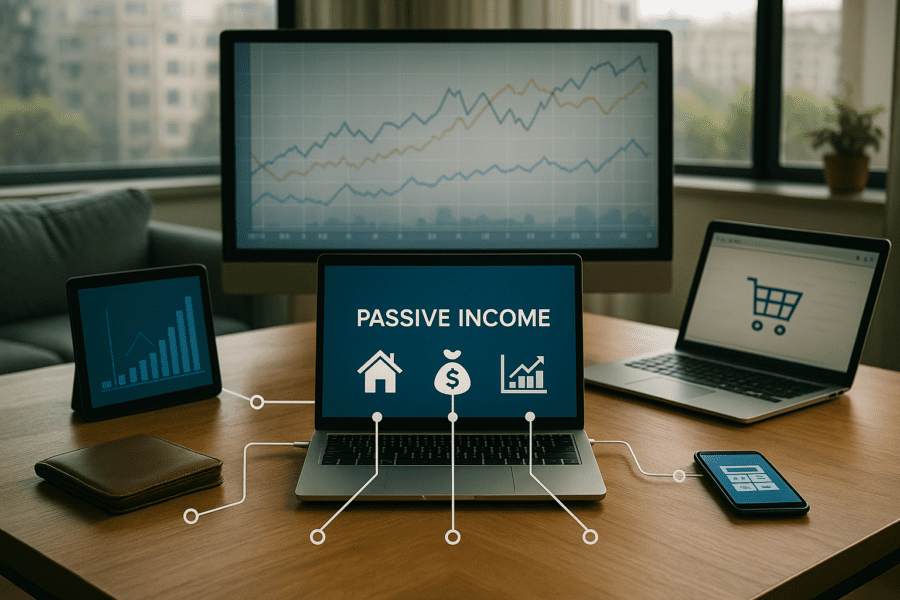

The push toward passive income in recent years feels like a quiet revolution in the way people approach money. Schemes for earning money with minimal ongoing effort pop up everywhere, from social media promises to mainstream financial advice. Watching this unfold, it is clear that more than just a passing craze is at play. People are rethinking how money can be made and how financial stability might be achieved through more than a single paycheck.
Not all passive income is created equal
When people hear passive income, the image that often comes to mind is of money effortlessly rolling in with little to no maintenance. Reality paints a more complicated picture. Many passive income streams require upfront work, skill, or capital. Rental properties, dividend stocks, and royalties on creative work all demand some resource investment before income flows without constant attention. Meanwhile, digital possibilities like affiliate marketing or automated dropshipping offer accessibility but vary widely in complexity and returns.
One observation is that “passive” rarely means “no effort.” For example, managing rental real estate often involves tenant issues, upkeep, and intermittent troubleshooting. Dividend investing requires research and sometimes tax considerations. Even less traditional streams like online courses or ebooks need marketing and occasional updates to stay relevant.
Still, the appeal of setting up these channels is powerful. It matches the growing desire for financial freedom, more control over working hours, and a hedge against unpredictable job markets. People often layer passive strategies alongside traditional work rather than replacing one with the other outright. That layering invites questions about how sustainable and effective it really is over time.
What motivates the rise in passive income interest?
Looking around, there are social and economic shifts nudging many toward side hustles with passive elements. A growing wealth gap, rising living costs, and uncertainty about retirement security push folks to create additional money sources. Technology lowers barriers to entry, making it easier than ever to start a blog, launch an online store, or invest through apps.
One can’t overlook how social media plays a surprising role here. Online influencers transform personal finance into a lifestyle aspiration. Their posts and videos often simplify or glamorize the effort involved, setting expectations that passive income is near effortless for anyone. This can fuel enthusiasm but causes misunderstandings as well. Not every story reflects the grind, learning curve, or failures that happen behind the scenes.
Platforms like TikTok and Instagram have seen a surge in creators sharing quick guides to earning money passively. While that has democratized knowledge to some extent, it also creates pressure to act fast or jump on trends that may not fit individual situations. The mix of possibility and hype influences how people decide to allocate time and money toward these methods.
How does passive income influence personal finances?
For many, passive income is less about replacing a paycheck and more about padding the budget, building emergency funds, or kickstarting savings. A few extra hundred dollars regularly can change spending decisions or reduce reliance on credit. However, managing multiple income streams also increases financial complexity. Taxes, record-keeping, and cash flow timing become more involved, especially without professional guidance.
That complexity might lead people to underestimate the ongoing work behind the scenes. For example, tax rules on passive income vary depending on the source, sometimes making filings complicated. The IRS has guidance on income from passive activities with specific nuances worth understanding before diving in. Financial professionals often emphasize planning and organization to avoid surprises during tax season.
Another noticeable effect is psychological. Knowing there is a back-up inflow can reduce stress and foster a sense of empowerment. At the same time, some people chase passive income returns so aggressively they take on considerable risk or spread themselves too thin, which can backfire financially and emotionally. The balance between cautious exploration and overreach is delicate.
Implications beyond individual wallets
Wider economic ripples are evident as more people embrace passive income. One consequence is the growth in platforms and services designed to facilitate this new financial behavior, from crowd-funded real estate to car-sharing apps. These developments shift how capital circulates and influence economic participation in subtle but significant ways.
On the other hand, a surge in passive income pursuits can impact labor markets. If workers increasingly supplement earnings via passive channels, traditional employers may face challenges in retention and wage growth dynamics. While it is too early to declare firm trends, economists are watching how these dynamics evolve, especially across younger generations.
Regulation may also need to adapt. Income sources that fall outside typical employment categories create hurdles in tax collection and social safety nets. Authorities have started addressing these gaps, but policies still lag behind changing financial habits. The IRS guidance on passive activity income reflects an effort to clarify some tax implications and enforcement mechanisms.
Watching the landscape evolve
Passive income is not a silver bullet or guaranteed path to wealth, but it reflects a shift in how people use technology and financial tools. There is a practical wisdom in testing different approaches and learning what fits individual circumstances. Over time, patterns will likely emerge around which methods sustain and how these affect broader financial health.
Real estate remains a popular choice for its long-term value and relatively predictable income streams. Resources like RealtyMogul offer accessible ways for individuals to invest without the full responsibilities of property management. Meanwhile, educational hubs including FINRA’s overview on real estate investments help people weigh risks and benefits carefully.
At the same time, digital and creative avenues continue to expand. The rise of platforms that enable creators to monetize content, courses, or software has broadened the notion of what counts as passive income. As attention shifts alongside trends online, the methods people rely on are often reflections of broader shifts in technology and culture.
Sources and Helpful Links
- Investopedia on Passive Income, comprehensive overview and definitions
- RealtyMogul, platform for real estate investment opportunities
- IRS guidance on passive activity income, tax implications for passive income
- FINRA on real estate investments, risks and considerations