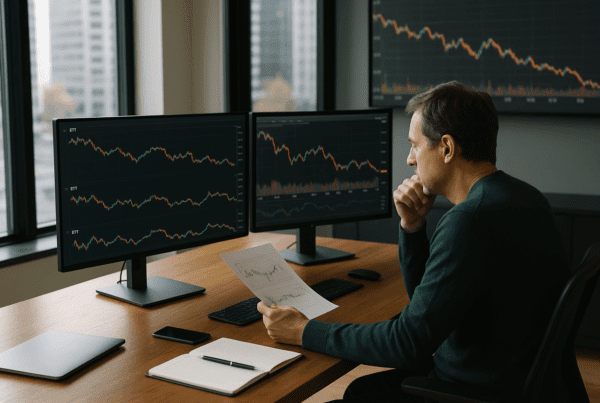

Exchange traded funds, or ETFs, have been around for a few decades, yet their expanding footprint in investor portfolios feels like a steady wave rather than a dramatic surge. Increasingly, people are turning to them when they want a sense of steadiness in uncertain times. And while ETFs have been popular for convenience and cost, the growing craving for stability in investments is shaping how these products are chosen and viewed.
Finding calm amid the market noise
The last several years have shown enough market turbulence to make anyone curious about better weathering the storm. Sharp swings in stock prices, geopolitical disruptions, and economic surprises sharpen the focus on safe harbors. ETFs answer with diversity and simplicity wrapped in a single ticker. They offer a chance to access markets or sectors without the weight of individual stock risk.
Investors seeking steadiness now often look for ETFs that track broad market indexes or specific defensive sectors. This is a different use than chasing high returns. The intention leans more toward preserving gains and smoothing volatility, which suits portfolios intended for medium- to long-term horizons with less drama.
Transparency and control in one package
What draws investors to ETFs beyond mere diversification is the real-time pricing and transparency they provide. Open-end mutual funds, traditionally rival investment vehicles, offer diversification but update price only once daily. ETFs trade like stocks throughout the market session, giving investors immediate pricing and the ability to react quickly if needed.
This flexibility enhances control over when and how investments change hands. For people who want to remain nimble yet anchored to stable holdings, ETFs offer a balance. The ability to watch intraday price movements helps in assessing the effect of market shifts and reduces the anxiety that can come from waiting for end-of-day valuations.
Different flavors of stability in ETF choices
Just as investors differ in what stability means to them, ETFs provide a spectrum of options. Some favor funds that replicate the entire market or major sectors like utilities or consumer staples known for steadier performance. Others move toward bond ETFs that blend government, municipal, and corporate debt, seeking income and less fluctuation.
One area growing in interest is low-volatility ETFs. These funds deliberately pick stocks with historically smaller price swings. While past patterns do not guarantee future outcomes, these ETFs cater to investors prioritizing calmer ride rather than wild growth spurts. It is a notable shift from chasing the newest hot sector or tech superstar stock.
Costs, convenience, and the subtle evolution of goals
The rise in ETF popularity partly ties to cost efficiency. Lower fees than actively managed mutual funds keep more returns in an investor’s pocket. Added to that, ease of buying and selling on normal exchanges engages both individual retail investors and larger institutional players. This ease aligns well with a mindset favoring steady gains and staying invested rather than timing the market.
There is also a practical layer where investors embed ETFs within larger portfolio strategies. Using them for core holdings backed by broad indexes complements the inclusion of more targeted assets elsewhere. This approach shows a maturing sophistication in how people think about stability, not as absence of risk but as thoughtful balance.
A part of modern financial habits and portfolios
Watching how ETFs fit into everyday investment habits reveals deeper changes. The streamlined nature fits into increasingly digital financial lives. Apps, online brokerages, and robo-advisors make putting money into a range of ETFs straightforward. Over time, this ease builds a habit of broad diversification tempered by a desire for predictability.
Yet, it is important to remember that while ETFs can soften the bumps, they do not eliminate risk. Market downturns affect even broad index funds. Credit quality, interest rate sensitivity for bond ETFs, and sector-specific pressures remain considerations. The growing role of ETFs in portfolios reflects a balancing act rather than a perfect shield.
As large asset management firms expand their ETF offerings and new variations continue to appear, investor choices multiply. Navigating this growing landscape requires understanding not just the cost or brand but the underlying asset mix and how it reacts under different market scenarios. In that way, ETFs offer a practical lens on financial stability as investors adapt to the realities of market cycles.
For those paying attention, ETFs have quietly become a trusted part of how people attempt to navigate the financial ups and downs without feeling the need for constant adjustment. They offer a blend of transparency, liquidity, and variety that fits a wide range of risk tolerance levels and goals. This quietly steady role is worth noting as it speaks to evolving investor wisdom shaped by experience rather than hype.
Exploring more about ETFs and investment strategies can help paint a clearer picture of what stability means in real portfolios. Resources like the SEC’s ETF guide offer reliable, independent insights. Similarly, the Investopedia overview of ETFs breaks down fundamentals for a practical grounding. For a long-term perspective, consulting the National Bureau of Economic Research on ETF impact reveals academic research into their market role.
In sum, the story of ETFs is less about flashy growth and more about steady presence, a reflection of investors’ search for reliable footing amid the financial world’s many uncertainties.
Sources and Helpful Links
- SEC guide to ETFs, official investor education resources on exchange traded funds
- Investopedia ETF overview, detailed explanations and definitions for ETFs
- National Bureau of Economic Research study, research on ETF market effects and role