When the talk turns to investing, stocks often dominate the conversation. For many years, stock markets have been the go-to for people looking to grow their wealth, with the beating pulse of corporate profits and market sentiment drawing attention and capital. Yet increasing numbers of investors are looking beyond these traditional avenues. Alternative assets, a broad and often loosely defined category, have caught the eyes of many seeking fresh ways to diversify, hedge, or expand their financial horizons.
The Quiet Appeal of Assets Off the Beaten Track
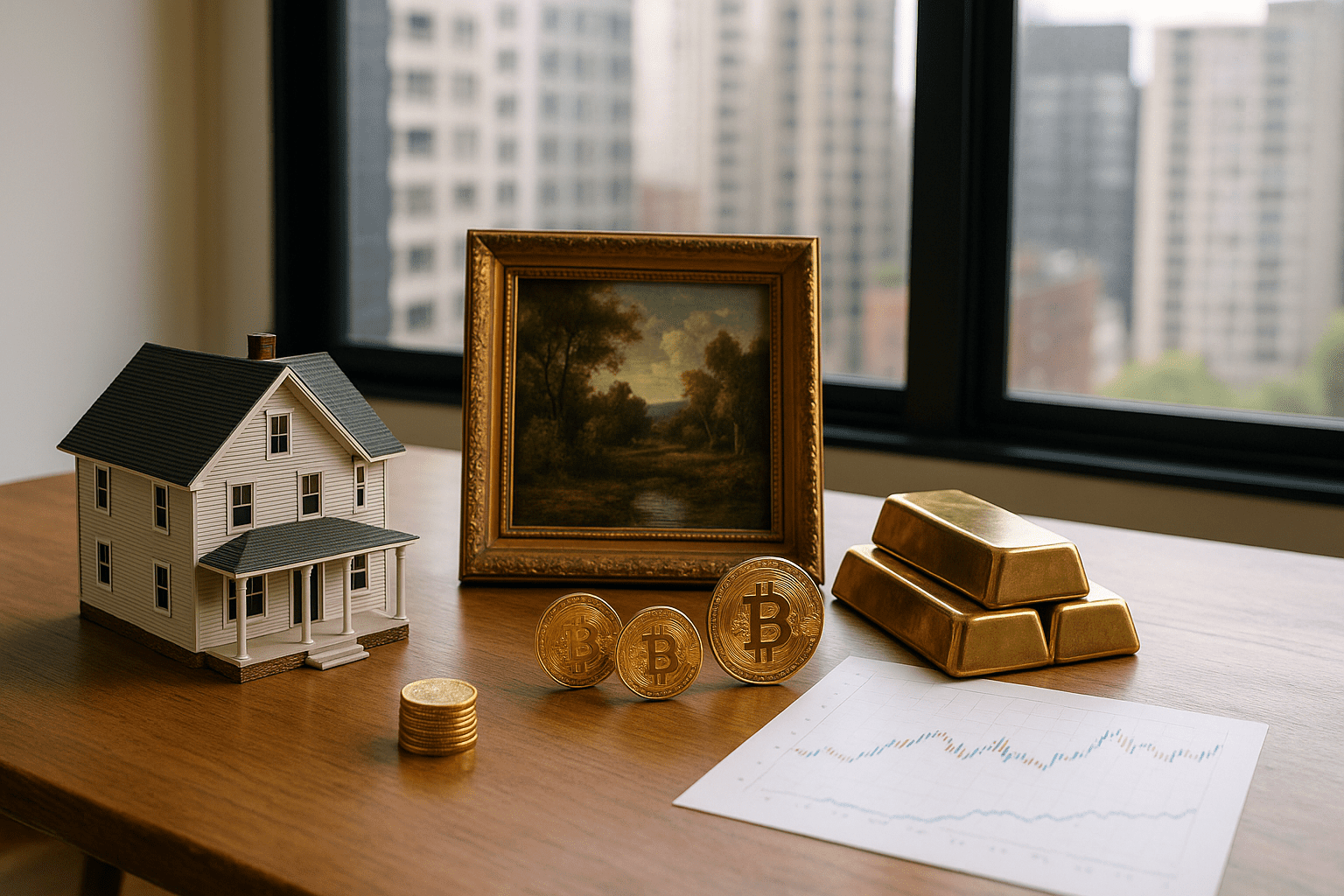
Alternative assets can be anything that is not standard stocks, bonds, or cash equivalents. This category stretches across real estate, commodities like gold and oil, private equity, hedge funds, collectibles such as art and wine, and newer digital entries like cryptocurrencies. At first glance, these might seem more exotic or risky. But their allure lies partly in their independence from the stock market’s daily swings. For investors, exposure to different economic forces means alternative assets may smooth out volatility or even provide returns when stocks stumble.
Take real estate for example. While closely tied to economic cycles, it operates on somewhat distinct dynamics, often influenced by local market conditions, interest rates, and demographic trends. Many individuals have hands-on experience here, owning rental properties or vacation homes, which adds a layer of tangible understanding that is sometimes missing in the abstract world of stock trading. Additionally, physical assets can give psychological comfort; there is something solid and visible about land and buildings that shares and bonds cannot quite match.
Shifting Risks and Seeking New Opportunities
The past decade has shown that reliance on stocks alone carries its share of surprises. Volatility spikes, geopolitical tense periods, and sudden market corrections have become more common sights, compelling investors to reconsider their strategies. It is not just the volatility itself, but the nature of risk that matters. The interplay between monetary policy shifts, inflation concerns, and global economic developments means conventional portfolios sometimes struggle to perform as expected.
During times of uncertainty, alternative assets might provide ways to reduce correlation with mainstream markets. For instance, gold often attracts attention as a safe haven in turbulent periods. Although no investment is completely risk-free, these assets offer exposures detached from equity price swings. Similarly, private equity or hedge funds may pursue strategies that exploit market inefficiencies or illiquid opportunities, aspects harder for public stock investors to access.
Interest in cryptocurrencies has notably accelerated this exploration, despite the asset class’s high swings and regulatory questions. Digital currencies represent a distinctly new form of asset, with technology and decentralization at their core. Some investors see this as a breakthrough for diversification, others as a speculative bet but both viewpoints underscore a willingness to think differently from the traditional 60/40 stock and bond world.
Access and Awareness are Changing the Game
Historically, investing in alternative assets often required significant wealth or institutional relationships. Private equity funds, venture capital, and certain hedge funds generally demanded high minimum investments and experienced gatekeeping, limiting access to everyday investors. The past several years have seen disruptions here too.
Financial technology platforms have emerged that lower barriers to these investments. REITs provide a more liquid entry point into real estate, while certain crowd-funding portals enable smaller stakes in private companies or real estate projects. Tokenization, splitting ownership of assets into smaller digital units, is another frontier enabling more flexible access to assets once locked behind steep thresholds.
This evolution feeds awareness as more investors come into contact with alternative assets and see them as viable portfolio additions rather than inaccessible curiosities. Educational resources expanding beyond traditional stock education further support this trend, encouraging a more nuanced view of managing financial risk and opportunity.
Not Without Tradeoffs or Questions
No investment landscape is without pitfalls. Alternative assets sometimes carry illiquidity, meaning it can be difficult or slow to convert holdings to cash. Valuation challenges also come up; unlike stocks listed daily with public prices, some alternatives require appraisal or rely on infrequent transactions, making it harder to know exact value at any moment.
Fees can be higher, especially in managed alternative strategies. Transparency varies as well, which leads some investors to approach these options cautiously. They need to weigh carefully the benefits of diversification or potential returns against these additional considerations.
Moreover, understanding the specific risks linked to each class matters. Collectibles, for example, may depend heavily on market taste and liquidity in niche circles. Commodities can be volatile due to geopolitical or weather factors. Cryptocurrencies remain a somewhat young field, influenced by regulatory shifts and evolving infrastructure.
What This Means for the Broader Investment Landscape
The growing interest in alternative assets is a natural reflection of an investing public that is no longer content with simple, traditional mixes. It indicates a landscape where personalization and strategy complexity are rising, influenced by technology, market changes, and a broadening set of options.
This shift may not be right for everyone or every situation, but it adds valuable texture to how portfolios are conceived and built. As more learn to navigate these areas with care and knowledge, the definition of diversification itself widens beyond conventional bounds.
Whether through a careful allocation to real estate investment trusts found on major exchanges or dipping into a small stake in a private startup accessed through new fintech services, the door to alternatives is opening widely. Those walking through it do so with an eye to managing risk differently and seeking opportunities beyond the well-trod paths of stock markets.
For readers interested in diving deeper into alternative investments, some resources to consider include the Investopedia page on the topic providing broad definitions and examples, the U.S. Securities and Exchange Commission’s guidance for investors on understanding alternative investments and their risks, and reports from industry sources like Preqin, which tracks trends in private capital markets. These can help ground exploration in verified knowledge rather than hype.
Sources and Helpful Links
- Investopedia The Alternative Investment Definition, broad overview and definitions of alternative assets
- U.S. SEC Guide on Alternative Investments, investor alerts and risk considerations from the regulator
- Preqin Private Capital Market Data, research and data on private equity, real assets, and alternatives
- Nareit REIT Information, details on real estate investment trusts as a popular alternative asset vehicle